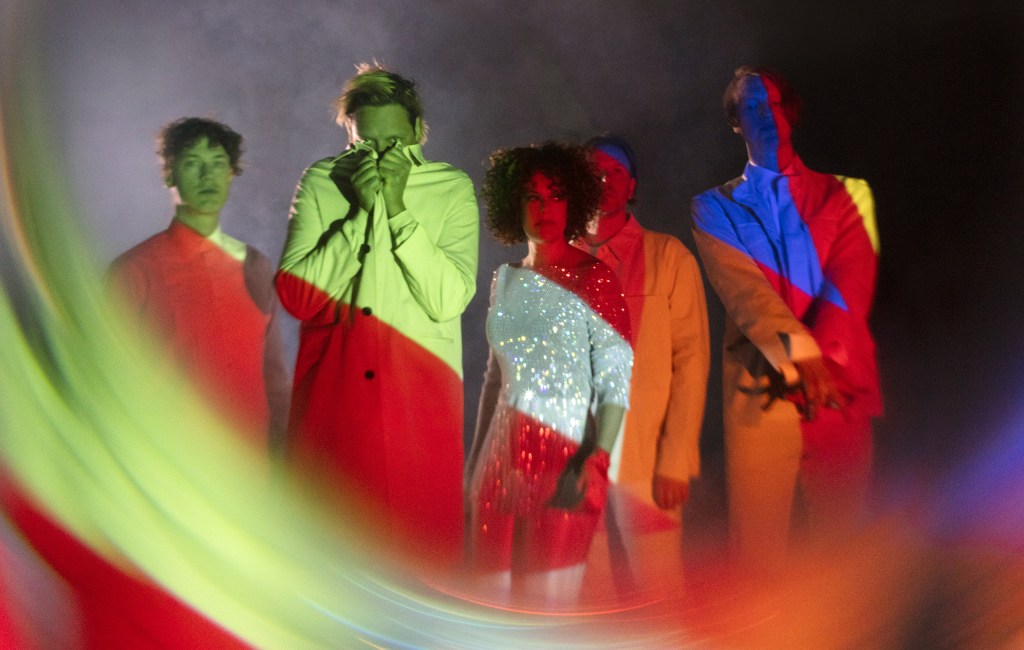
“The Lightning I & II” by Arcade Fire is probably my favourite song of the year. But I can’t put it in any official list of my favourite songs of the year.
The story of Arcade Fire’s 2022 reads like the script to a Scorcese flick. It begins with a band at rock bottom, seemingly barely able to recover from the disastrous fallout of an album that painted them as over-blown, pretentious, vacuous has-beens. When the year started, Arcade Fire had last been seen performing at a crypto conference to an audience more interested in artificially generated drawings of bored apes than in one of the most acclaimed bands of the 21st century. No one expected anything of them any more. Then, suddenly, like lightning, they resurfaced with this euphoric comeback, a rousing ode to life that united all of the different masks Arcade Fire have worn throughout the years. The gates were open for one of indie’s most beloved bands to march back in and reclaim their rightful throne.
And then, the news dropped. Accusations of sexual misconduct, manipulation and general asswipe behavior against frontman Win Butler flushed Arcade Fire back into the gutter. Butler’s characteristically pompous response, as well as his band’s decision to keep touring as if they weren’t sharing a stage with a man for whom the relentless adoration that comes with leading a world-renowned band would be about as healthy as a vat of hydrochloric acid to a goldfish, erased all of the goodwill their glorious comeback had gained them, and then some. It was clear that these people, who have raised so many spirits, hearts and fists over the years, unfortunately simply do not care about anyone’s feelings but their own.
Yet I still get goosebumps when I hear this song. It still sounds so grandiose, so life-affirming to me when Régine Chassange exuberantly declares that “the lightning comes” and the entire song explodes into the musical equivalent of waking up on the best day of your life. Does that make me part of the problem? Isn’t erasing Butler’s attempts to be seen as this voice of emotional relief, a damnatio memoriae of the positive image this song — and the album it preceded — are trying to sell the only kind of justice we can give his victims? I don’t know what the appropriate punishment for Butler’s actions is. I don’t even know if he can or even should be punished, at least in the legal sense. Yet I can’t just look at the dire shit that was revealed about him and just allow him to get away with it.
On one hand, I want to believe in forgiveness. Obviously. Seeing how Butler appears to be showing no remorse, however, that’s off the table. Yet I also want to believe in nuance. I want to believe that people who do bad things can still have good traits, be talented, and make good art. I want to believe that we should be allowed to enjoy good art by bad people. On the other hand, I believe it’s important that we shouldn’t make it easier for bad people to do bad things. There’s clear cases, like J.K. Rowling, who, if given more fame and money by people who continue to support her work, will use that fame and money to make life a living hell for trans people. Yet what about Win Butler? Is listening to Arcade Fire going to make him abuse more women? Going to an Arcade Fire concert will certainly help sustain the illusion he seems to be living in, but is playing his music. By blasting “The Lightning” whenever I feel down, do I contribute to Butler’s deception, to the gaslighting of his victims, to his attempts to continue being a rockstar as if there’s nothing going on, by thinking of him as a brilliant songwriter first, and an abuser only on second thought?
As with watching a Scorcese flick, I’m expected to judge for myself. Yet I don’t know.


 Retroversy
Leave a comment